
Every year, businesses, schools, and households replace thousands of electronic devices, from laptops and desktop computers to phones, servers, monitors, and networking equipment.
Most people only think about the first step: dropping off old electronics at a recycling facility or arranging a collection.
But what happens after your electronics are collected?
Where do old computers go? Are the materials actually recycled? Is your data removed before the device is processed? And how can businesses make sure their old technology is disposed of responsibly?
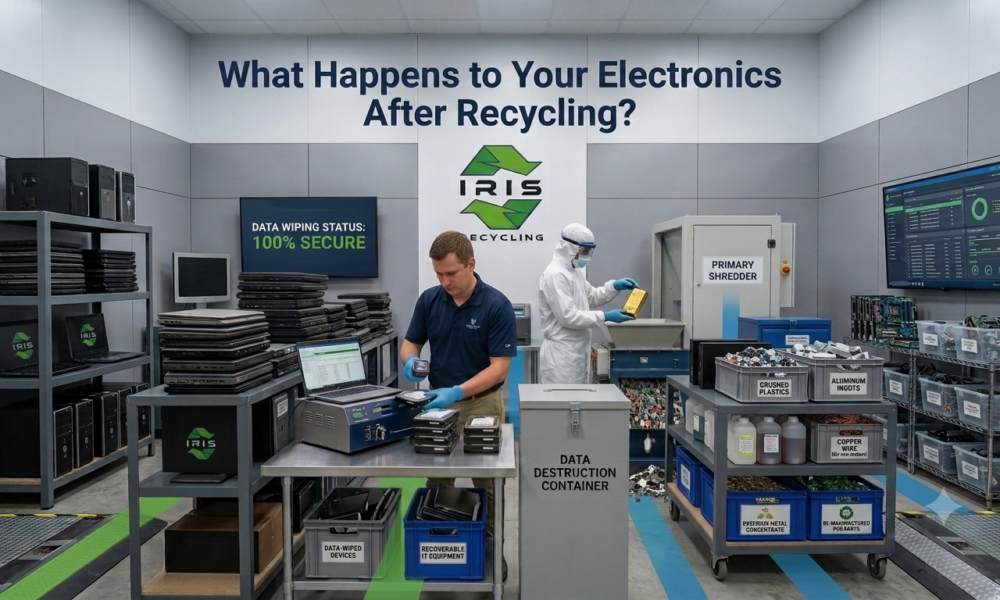
The truth is that professional electronics recycling is a detailed process involving secure collection, data destruction, sorting, refurbishment, component recovery, and material processing.
For businesses, this process is especially important because old devices can contain sensitive company information and valuable recoverable materials.
This guide explains exactly what happens to electronics after recycling and why choosing a responsible e-waste recycling provider matters.
What Happens After Electronics Are Collected?
Once electronic devices are collected, they enter a structured recycling process designed to recover valuable materials, protect sensitive information, and prevent harmful waste from reaching landfill.
A responsible electronics recycling process usually follows these stages:
- Collection and documentation
- Secure data destruction
- Device sorting and assessment
- Refurbishment and reuse
- Component recovery
- Material separation and recycling
- Returning recovered materials into supply chains
The goal is not simply to remove unwanted electronics.
The goal is to extend the useful life of devices where possible and recover valuable resources from equipment that can no longer be reused.
Step 1: Collection and Chain of Custody
The recycling process begins with proper collection and documentation.
When businesses, schools, or organisations arrange electronics recycling, responsible providers record the equipment collected and maintain a clear chain of custody.
This documentation helps track:
- What equipment was collected
- When it was collected
- Where it came from
- How it was processed
For businesses, this step provides accountability and supports responsible technology disposal practices.
A proper chain of custody is especially important for organisations handling:
- Customer information
- Employee data
- Financial records
- Internal business documents
- Confidential company information
Without proper tracking, businesses may have limited visibility into what happens to their retired technology after collection.
Step 2: Secure Data Destruction Before Recycling
One of the most important stages of electronics recycling is protecting the information stored on devices.
Old computers, laptops, servers, and storage devices can contain sensitive data even after files appear to be deleted.
Simply deleting files or performing a factory reset does not always remove information permanently.
Before devices are reused, dismantled, or recycled, professional recyclers ensure data-bearing components are securely handled.
This includes:
- Hard drives
- SSD storage
- Servers
- Laptops
- Desktop computers
- External storage devices
Secure data destruction methods may include:
- Certified data wiping
- Secure erasure software
- Physical destruction of damaged storage devices
For businesses, secure data destruction helps reduce risks associated with improper IT equipment disposal and supports responsible handling of sensitive information.
If your organisation is replacing computers or retiring old hardware, learn more about our computer recycling services and secure technology disposal options.
Step 3: Sorting and Equipment Assessment
After data security processes are completed, collected electronics move into sorting and assessment.
Not every device follows the same recycling pathway.
Each item is evaluated based on:
- Condition
- Age
- Functionality
- Repair potential
- Material value
A device may be classified as:
Suitable for Reuse
Working laptops, computers, or equipment may be refurbished and returned to use.
Suitable for Component Recovery
Some devices may no longer function but still contain valuable parts.
Suitable for Material Recycling
Equipment that cannot be reused is processed to recover materials.
This assessment prevents usable equipment from being unnecessarily destroyed and improves the overall efficiency of the recycling process.
Step 4: Refurbishment and Reuse
The most valuable outcome in electronics recycling is often reuse.
If a device can continue operating safely, refurbishment extends its useful life and reduces the demand for new manufacturing.
During refurbishment, technicians may:
- Clean equipment
- Replace damaged components
- Test performance
- Prepare devices for reuse
A refurbished laptop, computer, or other electronic device can continue serving another user instead of becoming unnecessary waste.
This supports a circular economy approach where technology remains useful for longer.
For organisations replacing large numbers of devices, professional IT asset disposal services can help manage retired equipment responsibly.
Step 5: Component Recovery
Electronics that cannot be fully refurbished may still contain valuable components.
During component recovery, technicians identify and remove parts that can still be reused.
Examples include:
- RAM modules
- Processors
- Screens
- Batteries
- Power supplies
- Networking components
- Internal hardware parts
For example, an old laptop with a damaged motherboard may still contain a working screen, keyboard, battery, or memory components.
Recovering these parts reduces unnecessary waste and allows valuable resources to continue being used.
Step 6: Dismantling and Material Recovery
When electronics cannot be reused or repaired, they move into material recovery.
Modern electronics contain many valuable materials, including:
- Metals
- Plastics
- Glass
- Electronic components
Metals
Electronic equipment contains recoverable metals such as:
- Copper
- Aluminium
- Steel
- Gold
- Silver
- Palladium
These materials can be processed and reused in new manufacturing.
This is why electronic waste is sometimes described as “urban mining” — discarded devices contain valuable resources that can be recovered instead of extracted again from the environment.
Plastics
Many electronic products contain plastic components, including:
- Computer cases
- Keyboard parts
- Device housings
Depending on their composition, plastics can be processed and reused in new products.
Glass
Screens and displays contain specialised glass that requires proper handling.
Older display technologies may contain materials that require controlled processing rather than standard recycling.
Hazardous Materials
Electronics may contain materials that require specialist handling, including:
- Batteries
- Certain chemicals
- Components containing heavy metals
This is why electronics should not be placed into general waste.
Professional e-waste recycling ensures these materials are processed responsibly.
Step 7: How Recycled Materials Return to Manufacturing
After processing, recovered materials can return to manufacturing supply chains.
Examples include:
- Copper reused in electrical products
- Aluminium reused in manufacturing
- Recovered plastics used in new products
- Precious metals returned to production systems
This reduces the need for extracting new raw materials and supports more sustainable technology production.
A responsible recycling process creates value from old electronics instead of allowing useful resources to be lost.
What Happens When Electronics Are Not Recycled Properly?
Not all recycling providers follow the same standards.
Poor handling of electronic waste can create several problems:
- Sensitive data may remain accessible
- Valuable materials may be lost
- Electronics may be sent to unsuitable processing facilities
- Environmental risks may increase
For businesses, choosing an unreliable recycler can create risks involving:
- Data security
- Compliance responsibilities
- Sustainability reporting
- Corporate reputation
A professional recycler should provide a transparent process covering collection, data security, processing, and responsible recovery.
Why Businesses Need Professional Electronics Recycling
Businesses regularly replace:
- Computers
- Laptops
- Servers
- Networking equipment
- Office electronics
Without a proper disposal process, these devices can create unnecessary risks.
Professional electronics recycling helps businesses:
Protect Sensitive Data
Old devices may contain confidential company information that requires secure handling.
Reduce Environmental Impact
Responsible recycling keeps electronic waste away from landfill.
Support Sustainability Goals
Many organisations now track their environmental impact and responsible waste management practices.
Manage Large Equipment Collections
Professional recyclers can support office upgrades, technology refreshes, and bulk equipment disposal.
How IRIS Recycling Handles E-Waste Processing in Sydney
At IRIS Recycling, electronic equipment collected from businesses and schools across Sydney follows a responsible recycling process.
Our approach focuses on:
- Secure collection
- Data protection
- Equipment assessment
- Responsible recycling
- Material recovery
We help organisations recycle:
- Computers
- Laptops
- Servers
- IT equipment
- Office electronics
Whether you are replacing a few devices or managing a larger technology upgrade, IRIS Recycling provides solutions designed for businesses, schools, and organisations.
For companies managing retired technology, our corporate e-waste recycling services provide a reliable way to handle unwanted electronics responsibly.
Frequently Asked Questions
What happens to electronics after they are recycled?
After electronics are collected, they are sorted, assessed, and processed through different recycling pathways. Working devices may be refurbished, while unusable equipment is dismantled to recover valuable materials such as metals, plastics, and glass.
Are files permanently removed before computers are recycled?
Professional recycling processes include secure data handling before devices are reused or dismantled. Businesses should always choose a recycler that follows proper data destruction practices before disposing of computers, laptops, or storage devices.
Where do recycled electronic materials go?
Recovered materials from electronics recycling can return to manufacturing supply chains. Metals, plastics, and other materials may be reused in new products, reducing the need for new raw material extraction.
What happens to old laptops after recycling?
Old laptops are assessed first. Working devices may be refurbished, while damaged laptops may be processed for component recovery and material recycling.
You can also read our guide on how to recycle old laptops safely and securely.
Can businesses track what happens to their old IT equipment?
Many professional recycling providers maintain documentation and tracking processes to provide better visibility into how collected equipment is handled.
Why should businesses use professional e-waste recycling services?
Professional e-waste recycling helps businesses securely manage old technology, protect sensitive information, recover valuable materials, and reduce environmental impact.
Recycle Your Electronics Responsibly With IRIS Recycling
Old electronics do not have to become waste.
With the right recycling process, computers, laptops, servers, and other technology can be securely processed, reused, and transformed into valuable recovered resources.
IRIS Recycling provides professional electronics recycling solutions for businesses, schools, and organisations across Sydney.
Arrange your electronics recycling collection today and give your old technology a responsible second life.
One thought on “What Happens to Your Electronics After Recycling? The Complete E-Waste Recycling Journey”
Comments are closed.