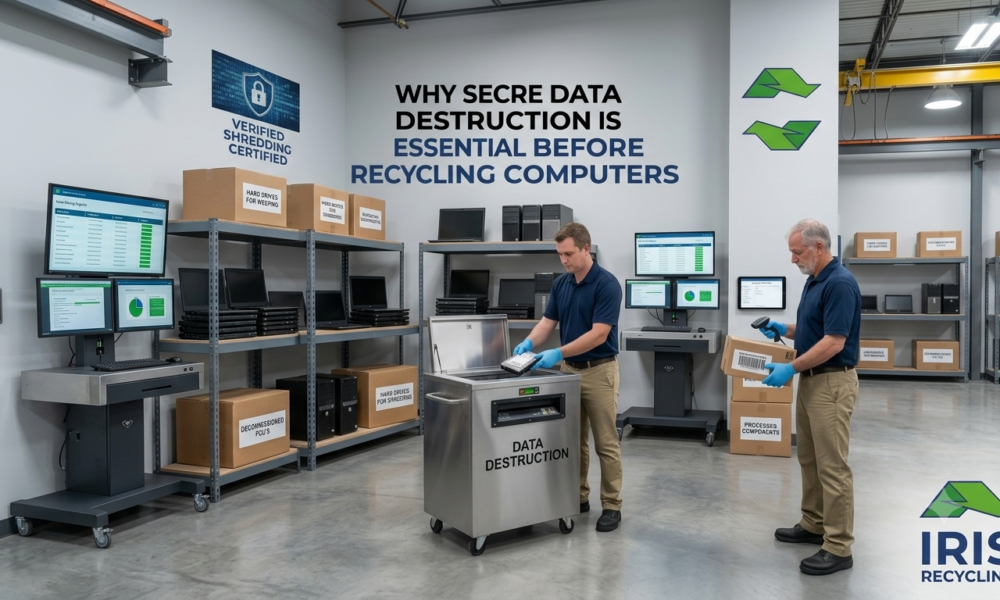
Secure data destruction is the process of permanently removing every trace of data from a drive before the hardware is recycled, so that nothing can be reconstructed by whoever handles the device next. Recycling old computers is the right thing to do. It keeps hazardous materials out of landfill, recovers valuable components, and supports a more sustainable approach to technology.
But recycling a computer without first destroying its data is not responsible disposal. It is a liability handed to whoever processes the device next. This guide explains why secure data destruction is essential before recycling computers, what it actually involves, and what happens when the step gets skipped.
Why Is Secure Data Destruction Essential Before Recycling Computers?
Deleting files or formatting a drive leaves most of the underlying data intact and recoverable with freely available tools. Verified erasure or physical destruction is the only method that removes data completely, closes the compliance gap under the Privacy Act, and gives a business documented proof that it met its obligations before the device left the building.
What Do Most People Get Wrong About Deleting Data?
Why Doesn’t Deleting a File Remove It?
Deleting a file removes the reference that tells the system where to find it. The data itself stays in the same location on the drive until something else is written over it, and in many cases that overwrite never happens.
Why Isn’t Formatting Enough?
A standard format rewrites the file system structure but leaves most of the underlying data untouched. Data from formatted drives can often be recovered in minutes using tools that are freely available online, so a personal device with no sensitive content may tolerate that risk, but a business computer that has held customer records, financial data, or login credentials should not.
Why Does This Matter More Than Ever?
How Common Are Breaches From Improperly Disposed Devices?
A hard drive resold through a second hand market, a donated laptop that was never wiped, or a server sent to a recycler without erasure verification each represents a potential exposure of whatever data was left on it. These breaches are more common than most businesses realise and rarely make headlines until it is too late.
What Does the Privacy Act Require?
Under the Privacy Act 1988 and the Notifiable Data Breaches scheme, organisations that hold personal information must take active steps to protect it, including at the point of disposal. If a breach results from improper disposal, the business faces mandatory reporting to the Office of the Australian Information Commissioner, along with potential regulatory action and penalties.
The Australian Privacy Principles are explicit that personal information must be destroyed or de identified once it is no longer needed. Recycling a computer without verified destruction does not satisfy that requirement, regardless of how well intentioned the disposal was. Our guide to laptop recycling and data security covers this obligation in more depth.
What Does Secure Data Destruction Actually Involve?
How Does Software Based Erasure Work?
Overwrite based erasure writes new data across every sector of the drive, replacing whatever was stored there with meaningless patterns, typically across multiple passes. The most recognised standard is the U.S. Department of Defense DoD 5220.22-M method, while NIST 800-88 provides guidance for media sanitisation across drive types including SSDs and flash storage. Software erasure is the standard approach for bulk IT disposal, where hundreds of devices need processing efficiently.
When Is Physical Destruction the Right Method?
When a drive is mechanically damaged, too old to complete a software wipe, or the data is sensitive enough to demand absolute certainty, physical destruction is appropriate. Shredding or degaussing renders the drive and its contents physically unrecoverable, and this method is also used for drives that fail during erasure or for storage media that cannot be effectively wiped. Our hard drive destruction guide explains both methods in detail.
Why Does Chain of Custody Matter?
Data destruction does not happen in isolation. For it to be meaningful from a compliance standpoint, there needs to be a documented record of every device collected, when it was collected, what erasure method was applied, and the outcome. This documentation closes the loop for a business’s Privacy Act obligations and provides the evidence trail needed for an audit or incident review.
What Happens if You Skip Data Destruction Before Recycling?
What Gets Recovered From Recycled Drives?
Research on second hand hard drives purchased from online marketplaces and recycling channels has repeatedly found recoverable data, including medical records, financial documents, login credentials, and in some cases full identity documents. The drives were not stolen. They were simply disposed of without verified erasure.
How Does Refurbishment Create Exposure?
Some computers collected for recycling are refurbished and resold rather than dismantled. Without data destruction at the point of collection, a refurbished device carries whatever data the previous owner left on it, so company files could end up on a device in someone else’s hands with no way to recall them.
Does the Liability Leave With the Device?
No. Under Australian privacy law, the obligation to protect personal information persists until the data is verifiably destroyed. Handing a device to a general waste removalist, a second hand dealer, or a well meaning charity without erasure verification does not transfer that liability. It simply leaves it unresolved.
Do Data Destruction and Environmental Recycling Work Against Each Other?
No, they work together. Software based erasure removes the data without physically harming the device, so a drive wiped to a DoD or NIST compliant standard is still fully intact for refurbishment, component recovery, or material recycling. Even physical destruction, which does render the device non functional, still allows the resulting materials to be processed for their metals, the same as any other electronic waste. The environmental cost of physical destruction is the loss of refurbishment value, not the loss of recyclable material, which is why a responsible recycler runs data destruction first, before sorting, refurbishment assessment or any other processing.
What Should You Ask Your E Waste Recycling Provider?
Which Erasure Standard Do They Use?
Look for a named, recognised standard such as DoD 5220.22-M or NIST 800-88. A general claim of secure wiping without a named method is not verifiable.
Does Destruction Happen Before Processing?
Erasure should occur before any device is sorted, refurbished, or dismantled. A provider that processes first and erases later, or does not specify the sequence, has a gap in the chain of custody.
What Happens to Drives That Cannot Be Wiped?
A responsible provider has a clear answer, physical destruction. A vague answer or no answer at all suggests the process has not been thought through. Our guide on how businesses can dispose of old IT equipment safely covers what to look for.
Can They Provide Documentation and Confirm Zero Landfill Processing?
You need written confirmation that your devices went through verified destruction, since a provider that cannot offer this cannot help you close your Privacy Act obligations. Confirm too that materials recovered from your devices are processed rather than sent to landfill, as explained in our guide to how to recycle old laptops safely and securely.
Frequently Asked Questions
Is a factory reset the same as secure data destruction?
No. A factory reset restores the operating system to its default state but does not overwrite the underlying data to any recognised standard. Data from a reset device can often be recovered with the same tools used on a device that was never reset, so it is not a substitute for verified erasure.
Can data be recovered from a shredded hard drive?
Reliable recovery from a properly shredded drive is not possible, because the platters are broken into fragments too small to reassemble. This is why physical destruction is used for drives that cannot complete a software wipe or for data sensitive enough to demand absolute certainty.
Does secure data destruction stop a computer from being refurbished?
No. Software based erasure removes the data without harming the device, so a laptop or desktop wiped to a recognised standard can still be refurbished and returned to use. Only drives that fail a software wipe are physically destroyed, and even then the materials are still recycled.
How do I know my recycler actually destroys data before processing?
Ask for the named erasure standard they use and confirm that destruction happens before sorting or refurbishment, not after. A recycler that cannot answer clearly or cannot provide documentation afterward has a gap in their process worth taking seriously.
Is secure data destruction included free with business recycling in Sydney?
Yes. IRIS Recycling includes Active@ KillDisk erasure as standard on every device collected from businesses and schools across Sydney, with no separate charge. Send a rough estimate of your device numbers and the team will confirm how to arrange your collection.
Recycle Your Computers the Right Way with IRIS Recycling
At IRIS Recycling, secure data destruction is the first step in our process, not an optional add on. Every device collected from businesses and schools across Sydney goes through Active@ KillDisk erasure before anything else happens, aligned with the DoD 5220.22-M standard and more than 20 other recognised international sanitisation standards.
We provide free pickup and drop off for business and school electronic waste across Sydney, with zero landfill recycling from collection through to material recovery. IRIS holds a 5.0 rating from more than 100 reviews, and our guide on where to recycle laptops in Sydney for free explains how collections work.
Contact us now and recycle your old computers with the data security your business actually needs.