
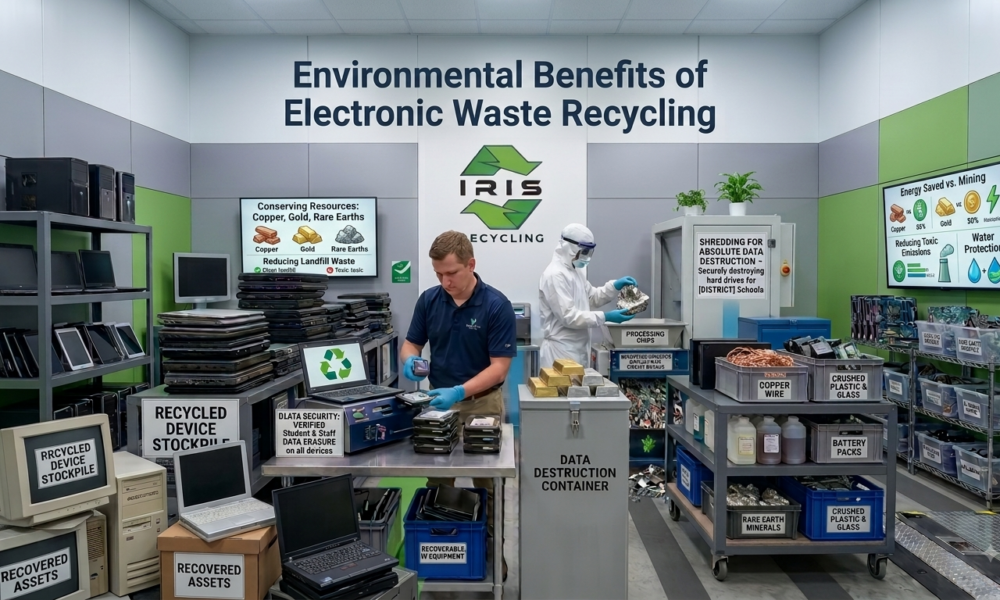
The environmental benefits of electronic waste recycling are the pollution avoided, resources recovered, and emissions saved when old devices are processed responsibly instead of being dumped. Electronic waste is the fastest growing waste stream in the world, with the United Nations reporting 62 million tonnes generated in 2022 and only 22.3% documented as properly collected and recycled.
Oceania, which includes Australia, generated about 16.1 kilograms per person that year, one of the highest rates anywhere. This guide covers the environmental benefits of electronic waste recycling, what happens when devices are not recycled, and why the choice matters well beyond the device itself.
What Are the Main Environmental Benefits of Electronic Waste Recycling?
Responsible recycling keeps hazardous materials out of soil and water, recovers valuable metals so less ore is mined, and reduces the energy needed to make new products. It also extends the life of devices and components, lowers carbon emissions across the supply chain, and supports a circular economy where materials stay in use.
Why Is Electronic Waste in Landfills Such a Problem?
Why Are Electronics Not Inert Waste?
Most household and office waste breaks down over time, slowly and imperfectly. Electronics do not. Their metals, plastics, glass, and chemical compounds are engineered for durability, and in a landfill that durability works against the environment.
Which Hazardous Materials Leach Into Soil and Groundwater?
Lead, found in solder joints and older CRT screens, leaches into soil and groundwater over time. Mercury, found in some display backlights and switches, is a neurotoxin that accumulates in ecosystems and enters the food chain. Cadmium in some rechargeable batteries persists in soil for decades, and brominated flame retardants release toxic compounds when they break down or are burned.
Why Does Scale Make It a Systemic Problem?
One device in landfill is a localised risk. Millions of devices across thousands of sites over decades create a systemic problem that is expensive and sometimes impossible to fully remediate. The benefit of recycling is therefore cumulative and not just about one device, because it removes hazardous materials from a waste stream that would otherwise carry them into soil, water and ecosystems at scale.
How Does Recycling Keep Hazardous Materials Out of the Environment?
What Gets Removed From the Waste Stream?
Responsible recycling intercepts hazardous materials before they reach landfill and routes them to specialist handlers. Lead is processed by licensed smelters, mercury is captured under strict controls, and cadmium from batteries goes through dedicated battery recycling streams.
Why Does This Matter Beyond Compliance?
Keeping these materials out of landfill prevents contamination of local soil, groundwater, and the ecosystems connected to disposal sites. For organisations retiring devices at volume, it is a measurable outcome rather than a symbolic one, and our guide on how businesses can dispose of old IT equipment safely shows how to build it into a process.
How Does Recycling Recover Valuable Raw Materials?
Which Metals Can Be Recovered From Electronics?
Copper appears in wiring, circuit boards and motors, and aluminium in casings and heat sinks. Gold, silver, palladium and platinum sit in connectors and contacts at concentrations often higher per tonne than in raw ore, which is why electronic waste is sometimes called urban mining. Our list of the top 10 items you can recycle with an e waste company shows how many everyday devices carry these materials.
How Do Recovered Materials Reduce Mining?
Mining involves land clearing, energy intensive processing, heavy water use, and long term waste liabilities. Every tonne of copper recovered from electronics is a tonne that does not need to be mined, and every kilogram of recovered gold reduces demand for high impact gold mining.
What About Rare Earths and Critical Minerals?
Devices also contain neodymium in motors and speakers, indium in display screens, and cobalt in lithium ion batteries. The United Nations estimates that electronic waste recycling meets only about 1% of global rare earth demand, so there is plenty of room to recover more.
How Does Recycling Reduce Energy Use in Manufacturing?
Why Is Making New Components So Energy Intensive?
Building a new device demands energy at every stage, from mining and refining to fabrication and assembly. For a laptop, most of the lifetime energy footprint comes from manufacturing rather than use.
How Much Energy Do Recycled Materials Save?
Recycling aluminium uses around 95% less energy than producing it from bauxite ore, and recycling copper uses roughly 85% less than primary production. Refurbishing a whole device goes further, because it displaces the entire manufacturing energy cost of a replacement.
How Does Recycling Extend the Life of Products and Components?
How Does Refurbishment Keep Devices in Use?
Devices in reasonable condition are assessed, repaired if needed, and returned to use. A laptop from a business refresh may serve several more years as a school device or a lower cost machine for a small business, which directly reduces demand for new manufacturing and keeps the energy already embedded in the device in productive use.
How Does Component Harvesting Help?
Devices too old for refurbishment can still yield working RAM, processors, screens, batteries, and power supplies. To see the full journey from collection to reuse, read what happens to your electronics after recycling.
Does Electronic Waste Recycling Cut Carbon Emissions?
What Is the Carbon Benefit of Recycling and Reuse?
Reduced mining, lower manufacturing energy, and longer product lifetimes combine into a measurable drop in emissions across the electronics supply chain. For organisations with carbon reduction or net zero targets, responsible disposal is a quantifiable contribution.
What Does Avoiding Incineration Change?
In some regions, unrecycled electronics are incinerated, releasing dioxins and furans from burning brominated flame retardants along with direct carbon emissions. Responsible recycling avoids both.
How Does Electronic Waste Recycling Support a Circular Economy?
What Is the Difference Between Linear and Circular Models?
The linear model extracts raw materials, manufactures products, uses them, and discards them. A circular model keeps materials in use through reuse, repair, refurbishment, and recycling, with material recovery as a last resort rather than a first response.
Why Are Electronics Well Suited to Circular Models?
Electronics contain valuable recoverable materials, their components often outlast the devices they come from, and refurbished devices have genuine market demand. That makes them one of the most practical applications of circular principles.
What Role Do Businesses and Schools Play?
Organisations that retire devices at volume have an outsized influence on how well the circular economy works in practice. One IT refresh that recycles a hundred devices instead of landfilling them removes hazardous material from the waste stream and returns metals and components to use. Our guides on why offices need professional electronic waste disposal and how schools can responsibly recycle old computers explain how to start.
What Does It Cost the Environment When Electronics Are Not Recycled?
Every tonne that goes to landfill represents hazardous materials in the environment, recoverable resources permanently lost, and energy and emissions that did not need to be generated. These are measurable outcomes with real consequences for soil, water, ecosystems, and climate.
Frequently Asked Questions
Is it better to refurbish or recycle old electronics?
Refurbishing comes first when a device still works, because it avoids the energy and materials needed to build a replacement. Devices too old or damaged for reuse are then stripped for components or recycled for materials, keeping them out of landfill.
Can I put old electronics in the general waste bin?
No. Electronics contain lead, mercury and cadmium that can leach into soil and groundwater, and the recoverable metals inside are lost for good. A specialist recycler routes hazardous materials to licensed handlers and recovers what can be reused rather than losing it.
How does recycling electronics reduce mining?
Recovered copper, aluminium, gold and other metals return to manufacturing as secondary materials, so less ore needs to be mined. Mining involves land clearing, heavy energy use and water consumption, so every tonne of metal recycled avoids that footprint.
Does electronic waste recycling really reduce carbon emissions?
Yes. Recycling cuts the energy needed to process metals, refurbishment avoids new manufacturing, and proper handling prevents toxic combustion byproducts from incineration. For organisations with carbon reduction targets, it is a quantifiable contribution.
Is electronic waste recycling free for businesses and schools in Sydney?
Yes. IRIS Recycling offers free pickup for businesses and schools across Sydney, with zero landfill processing for every device. Contact the team with a rough estimate of your equipment, and they will confirm how to arrange a bulk collection that suits your timeline.
Where Can Your Business Recycle Electronics Responsibly in Sydney?
Electronic waste is a global environmental problem, and what your business or school does with its old devices is the part you can control. IRIS Recycling makes that part straightforward, with free pickup across Sydney, zero landfill processing for every device, and no cost for business and school collections.
IRIS holds a 5.0 rating from more than 100 reviews, and every device goes through Active@ KillDisk erasure first, so your data is protected as well as the environment, as explained in why secure data destruction is essential before recycling computers. Our guide on where to recycle laptops in Sydney for free explains how collections work.
Want your next IT refresh to leave a smaller footprint? Arrange your free electronic waste pickup with IRIS Recycling today.